Pregnancy and Infant Loss Remembrance Day: Kamashi’s story
October 01, 2026
Pregnancy and Infant Loss Remembrance Day, observed on 15 October, raises awareness of pregnancy and infant loss and recognises the grief experienced by families around the world.
In Ethiopia, limited access to maternal healthcare can increase the risks faced by mothers and babies during pregnancy and childbirth. Kamashi’s story shows the devastating consequences of delayed emergency care — and the life-changing impact of specialist treatment and rehabilitation.
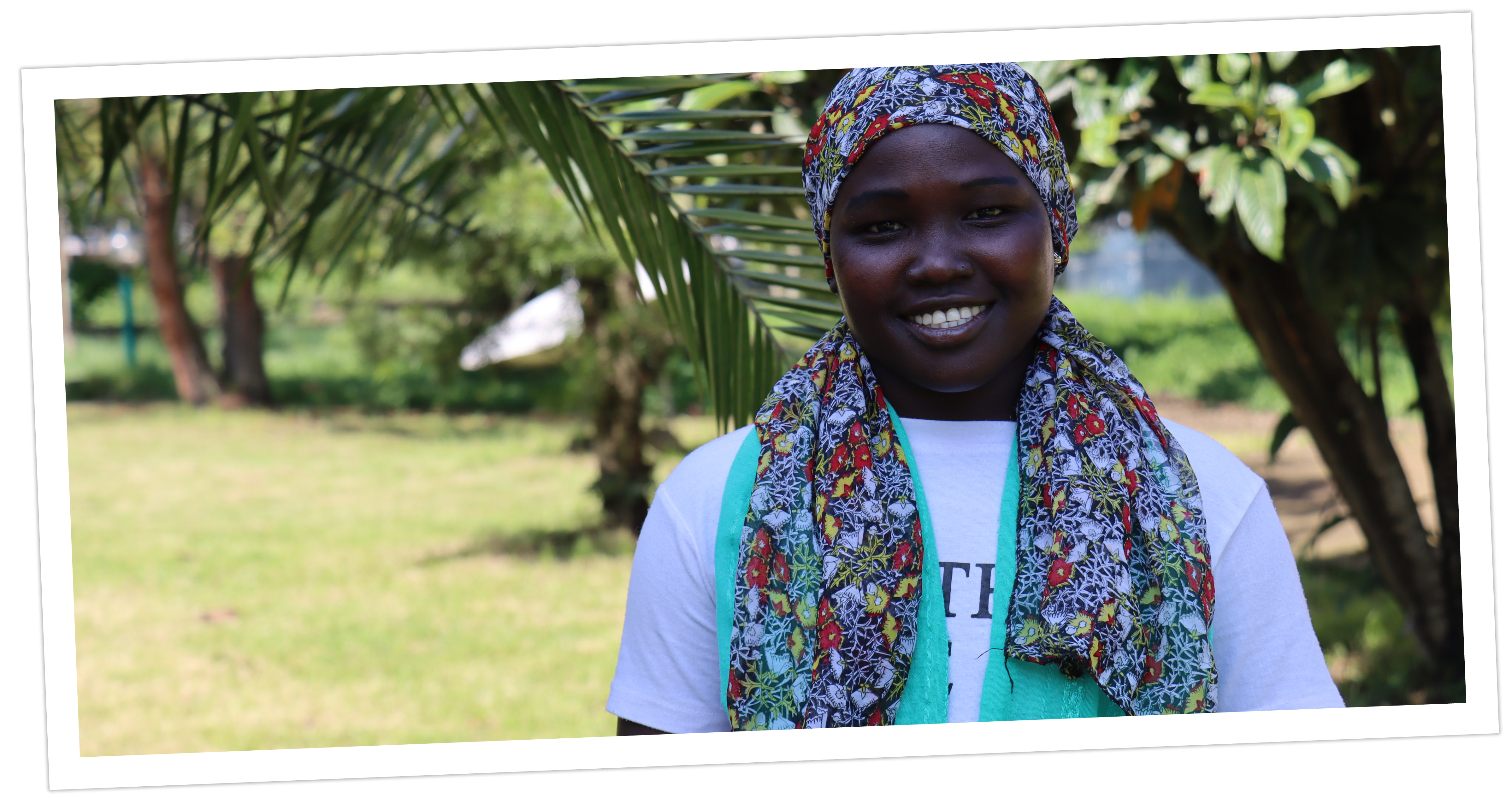
Each year on 15 October, Pregnancy and Infant Loss Remembrance Day provides an opportunity to remember babies lost during pregnancy, childbirth and infancy — and to recognise the grief carried by mothers and families around the world.
For women living in communities where access to maternal healthcare is limited, pregnancy and childbirth can carry additional risks. Long distances to health facilities, a lack of antenatal care and delays in receiving emergency obstetric treatment can have devastating consequences for both mother and baby.
Kamashi knows only too well how quickly childbirth can become a medical emergency.
Far from medical care
Kamashi grew up in Ethiopia’s Benishangul-Gumuz Region. The closest health centre was more than 12 hours away on foot, which meant she was unable to attend antenatal appointments. When labour began, medical care was far beyond her reach.
After three days of difficult labour at home, members of her community carried her to the nearest town. By the time she reached hospital and delivered her baby, Kamashi had suffered devastating injuries.
She had developed severe obstetric fistula, leaving her incontinent of both urine and faeces. She had also sustained nerve damage affecting her leg.
A year of isolation
For the next 12 months, Kamashi remained at home. Unaware that treatment for her condition existed, she lived with constant incontinence and increasing isolation.
“No one came near me, and I spent my days completely alone in my small room,” she recalls. Her mother was the one person who remained beside her.
Kamashi’s husband abandoned her at the hospital and later remarried. For a young woman already dealing with the physical consequences of an extremely difficult birth, the social and emotional consequences were profound.
Eventually, local representatives told Kamashi about an organisation that could help women with her condition. Her brother helped her travel to Asossa, and from there arrangements were made for the long journey to Hamlin’s Addis Ababa Fistula Hospital.
The long road to recovery
Kamashi’s injuries were complex. Before surgeons could begin repairing her fistula, the medical team needed to address the nerve damage in her leg. Kamashi spent many months undergoing physiotherapy to rebuild her strength and mobility.
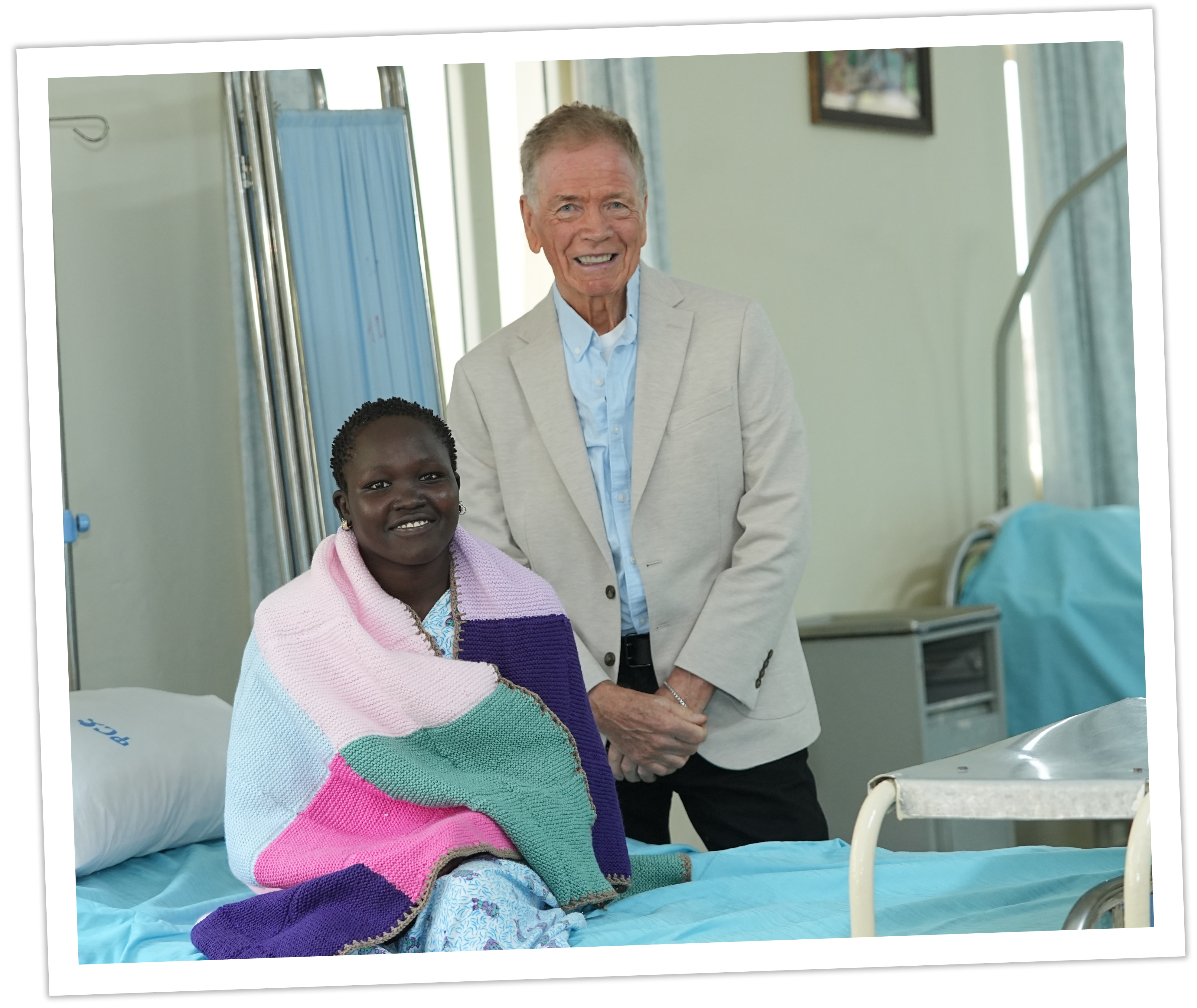
Nigel Brooksby, Chair of Catherine Hamlin Foundation International, met Kamashi during his first visit to the Addis Ababa Fistula Hospital. “She lived a full day’s walk from the nearest clinic, meaning safe maternity care simply wasn’t an option,” he says.
When Nigel met her, Kamashi had already been at the hospital for almost two years. “Her journey to healing proved to be a long and arduous one. She had been patiently undergoing intensive physiotherapy just so she could be strong enough for surgery.”
Eventually, Kamashi was ready. Her treatment was successful.
“Thank God, both conditions have been treated successfully and I have fully recovered,” Kamashi says. “I am doing very well now.”
Rebuilding her future
Treatment at Hamlin extends beyond surgery.
After recovering, Kamashi moved to Desta Mender, Hamlin Fistula Ethiopia’s rehabilitation and reintegration centre, where women can regain their independence and prepare for life after treatment.
Kamashi has completed training in vegetable farming, sheep and goat rearing, and sewing. She is also developing literacy, practical and small-business skills. Her plans are ambitious: to farm, raise livestock and build a tailoring business.
For Nigel, receiving an update about Kamashi’s recovery was particularly moving. “It is rare in life to meet someone whose story comes completely full circle — from enduring unimaginable suffering to regaining full health, dignity and a future.”
He adds: “Knowing that she has been able to regain her life and independence is truly wonderful.”
Making childbirth safer for women and babies
On Pregnancy and Infant Loss Remembrance Day, we remember the babies whose lives were tragically short and the families who continue to carry their loss. We also recognise the importance of ensuring every woman can access quality maternal healthcare before, during and after childbirth.
For women in remote communities in Ethiopia, distance can still determine whether timely care is possible.
Preventing prolonged obstructed labour — and reducing the risk of devastating outcomes for both mothers and babies — requires access to skilled midwives, antenatal care, community education, referral pathways and emergency obstetric services.
This is at the heart of Hamlin Fistula Ethiopia’s mission.
Kamashi’s experience is a powerful reminder of what can happen when essential maternal healthcare is too far away. Her recovery also shows what becomes possible when a woman is found and given access to the specialist treatment, rehabilitation and long-term support she needs to rebuild her life.
When I heard from the health professionals that I would go to Addis Ababa and get cured, I was so happy.
- Tesfanesh, former fistula patient


Catherine Hamlin Fistula Foundation acknowledges the Traditional Owners and Elders past, present and emerging throughout Australia and the Gadigal people of the Eora Nation, the Traditional Owners of the land and waterways on which our Australian office is situated. We acknowledge the many ethnic groups in Ethiopia and their ancestral and cultural connection to the land where our work is undertaken.