Building specialist expertise in urogynecology
July 27, 2026
At the 2026 International Urogynecological Association (IUGA) Annual Meeting, Dr Biniyam Sirak and Dr Bitew Abebe shared insights with the IUGA Board on Hamlin Fistula Ethiopia’s Urogynecology Fellowship Program and how it is strengthening specialist care for women with complex pelvic floor conditions.
Reducing maternal mortality and morbidity is a priority for Ethiopia’s Federal Ministry of Health. This includes an ambitious commitment to eliminate obstetric fistula as a public health problem.
Achieving this goal, however, requires more than expanding access to treatment. Ethiopia also needs a strong and sustainable health workforce with the specialist knowledge, clinical skills and leadership capabilities to treat complex pelvic floor disorders and strengthen maternal health services.
The Urogynecology Fellowship Program
In response to this need, Hamlin Fistula Ethiopia joined Mekelle University and the Worldwide Fistula Fund in 2015 to establish the Urogynecology Fellowship Program.
The three-year program is designed to address the shortage of specialist medical professionals in Ethiopia and provide physicians with a comprehensive, multidisciplinary understanding of pelvic floor disorders.
The fellowship is accredited through Mekelle University. The Worldwide Fistula Fund provides financial support and assists with the recruitment of program directors and academic staff, while fellows receive specialist clinical training through Mekelle University and Hamlin Fistula Ethiopia.
Program objectives
The program’s primary objective is to equip physicians with the knowledge and expertise to assess and treat women with pelvic floor disorders, injuries to the reproductive and urinary systems, and associated complications.
Through theoretical learning, practical training and supervised clinical experience, fellows learn to:
- understand the anatomy and pathophysiology of the urinary and lower gastrointestinal tracts and pelvic support structures;
- assess patients with pelvic floor disorders and urinary incontinence, including taking medical histories, conducting examinations and interpreting diagnostic procedures such as urodynamic testing;
- identify and manage childbirth injuries affecting the urinary system, lower gastrointestinal tract and pelvic floor;
- understand complex and repeat pelvic floor surgery, and undertake primary continence and prolapse procedures;
- critically appraise scientific publications and design and conduct operational research in urogynecology; and
- develop management, leadership and teaching skills to strengthen maternal health services in their workplaces.
Course structure
The fellowship includes six clinical modules and a seventh module focused on health service management and research. Each module combines theoretical study with practical clinical training.
The modules are:
- General urogynecology assessment
- Conservative management of urogynecological conditions
- Surgical treatments
- Specialist urology
- Colorectal care
- Neurology
- Health management skills and research thesis
Program fellows
Applicants must be licensed to practise obstetrics and gynaecology in Ethiopia. They are also expected to demonstrate strong communication and leadership skills and to have completed community service.
Applications are particularly encouraged from women, physicians working in teaching hospitals and candidates who have previously contributed to published research.
Once admitted, fellows take an active role in clinical conferences, seminars, small-group discussions and journal clubs at Mekelle University and Hamlin Fistula Ethiopia.
They also undertake placements of between two and four weeks in several related specialties, either at Mekelle University or at other partner universities. These include:
- general surgery and urology,
- radiology, and
- critical care and emergency medicine.
Research is another important component of the fellowship. Each participant must develop and implement a research plan under the supervision of a urogynecologist and contribute to at least one research project before completing the program.
Evaluating participants
Fellows are assessed continuously throughout their training to ensure they are developing the required knowledge, judgement and technical skills.
Attending physicians complete formal competency assessments at the end of each clinical rotation. Based on a fellow’s performance, faculty members may recommend progression to the next stage of training, additional mentoring and monitoring, probation, graduation or, where necessary, dismissal from the program.
To graduate, fellows must pass biostatistics and epidemiology, submit their research, achieve a minimum score of 70 per cent across written, practical and oral examinations, and publicly defend their thesis before a three-member faculty panel.
Program impact
Seven fellows have graduated from the program to date. Five are currently working with Hamlin Fistula Ethiopia, one provides specialist consultancy services to different organisations, and one is practising in Rwanda.
A further five doctors are currently undertaking the fellowship: two are in their second year and three are in their first year.
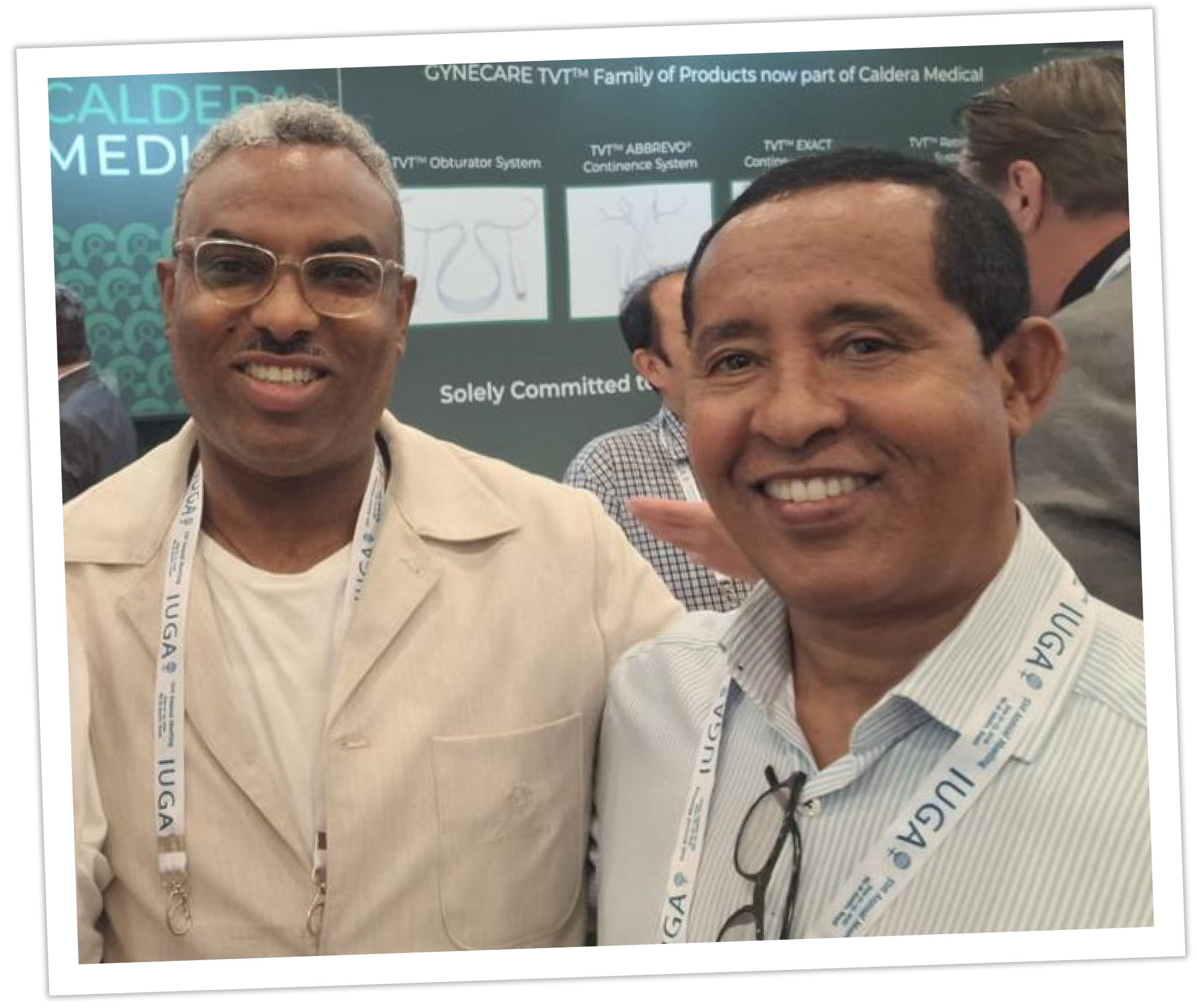
For Dr Biniyam Sirak and Dr Bitew Abebe (pictured), this investment in specialist training means that the Urogynecology Fellowship Program is able to build expertise that will remain within Ethiopia’s health system.
Graduates are not only equipped to provide high-quality care for women with complex pelvic floor conditions; they can also train colleagues, lead clinical services, undertake research and strengthen the quality of maternal healthcare for years to come.


Catherine Hamlin Fistula Foundation acknowledges the Traditional Owners and Elders past, present and emerging throughout Australia and the Gadigal people of the Eora Nation, the Traditional Owners of the land and waterways on which our Australian office is situated. We acknowledge the many ethnic groups in Ethiopia and their ancestral and cultural connection to the land where our work is undertaken.