Shining a Light on Birth Trauma: Birtukan’s Story of Healing
June 23, 2026
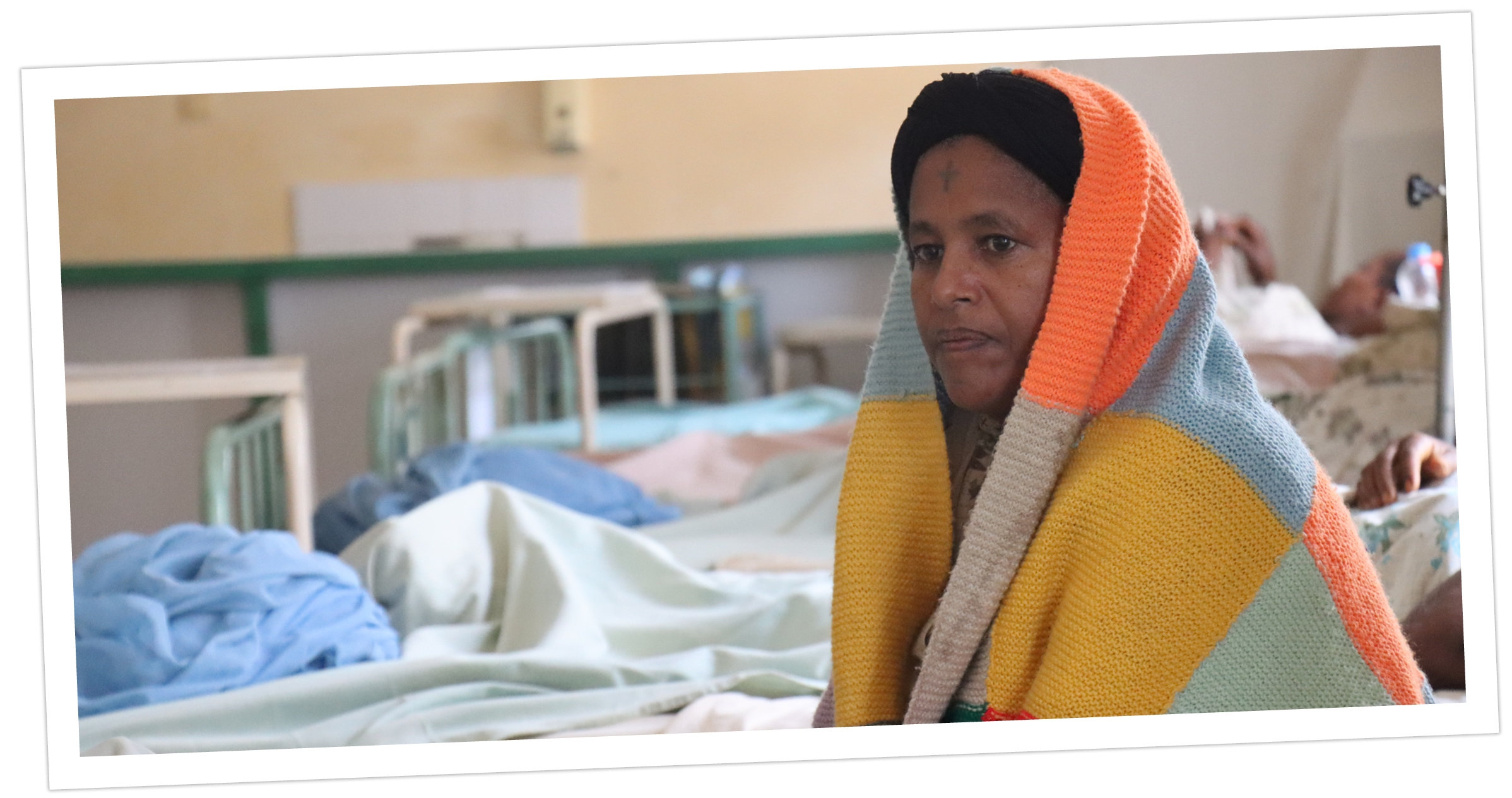
During Birth Trauma Awareness Week in Australia, we are reminded that birth trauma can affect every part of a woman’s life — her body, her emotional health, her relationships and her sense of self.
For women in Ethiopia, a lack of nearby clinics, limited access to specialised maternal healthcare and the long distances many women must travel for support can make childbirth extremely dangerous. Too many women give birth at home without skilled assistance. If they experience obstructed labour, there is a high risk of stillbirth and obstetric fistula: a preventable childbirth injury that can cause chronic incontinence, deep emotional distress and isolation from family and community.
Birth trauma for women in Ethiopia can be both physical and emotional. For Birtukan, it changed the course of her life.
A dangerous birth far from care
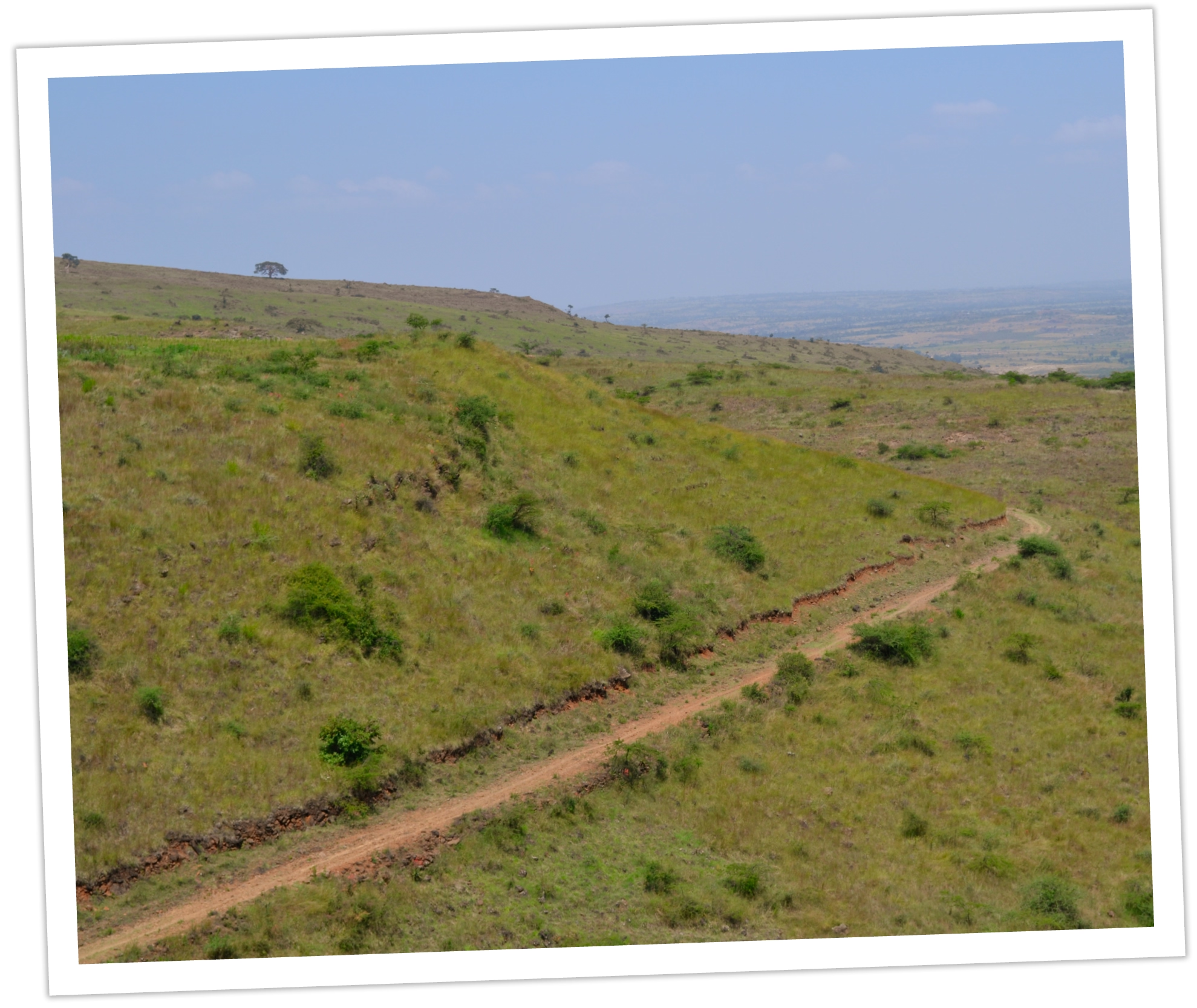
Birtukan is a mother of six. Like many women in rural Ethiopia, all her children were born at home, far from any clinic or hospital. Her final pregnancy was especially difficult. Birtukan remembers it as a time of heavy physical pain and growing fear. She says: “I will never forget how heavy and agonising that pregnancy was on my body.”
During the pregnancy, Birtukan began experiencing ongoing physical problems, including urinary issues that affected her daily life. When labour finally came, it was frighteningly fast. “I had to travel for an hour — most of the way on foot and partly cramped inside a bumpy Bajaj [a three-wheeled vehicle] — just to reach the district maternity centre,” she says.
Birtukan feared she would not survive the journey. But when she reached the maternity centre, staff were on hand to help. “They assisted me through a brutal labour that required an operation and heavy stitching.”
Birtukan survived. But the aftermath of the birth broke her spirit.
Living with the impact of obstetric fistula
The emotional impact of Birtukan’s injury was devastating.
To make matters worse, her husband — the father of two of her children — abandoned the family when her condition began. Left on her own, Birtukan had to support her six children while living with constant leakage, physical pain and deep shame.
Birtukan continued working on her land, but her pain limited her strength and made farming difficult. For many years, she lived in silence, unaware that specialised treatment or a place of refuge existed for women like her.
Birth trauma can affect a woman’s psychological health and emotional wellbeing, and may contribute to depression and anxiety disorders, including postpartum depression and anxiety.
For women living with obstetric fistula, postnatal depression and anxiety may be intensified by stigma, poverty, isolation and the belief that treatment is not possible. For Birtukan, the emotional distress was compounded by years of silence. She was caring for her children, trying to work, and carrying the burden of a condition she did not understand.
The emotional toll of birth trauma
After the birth, Birtukan began leaking urine continuously. “The flow was constant; it would not stop completely even when I sat down,” she describes.
For Birtukan, the physical injury quickly became a source of shame, isolation and emotional distress.
“This condition turned my daily life into a prison of shame,” she says. “It became incredibly difficult to move around or be near other people.”
Her condition affected every part of her life, including her ability to take part in her faith community. “When it was time for religious prayers, I couldn’t stand with the congregation, and I had to stop participating in church gatherings entirely because I couldn’t stand for long periods without leaking.”
Like many women living with untreated obstetric fistula, Birtukan did not know her condition had a name. Nor was she aware that treatment was possible. “I didn’t know how to ask for help,” she says. “So, I coped the only way I knew how: by keeping quiet, enduring the isolation at home, and hiding my leaking from the world.”
Finding care, dignity and support
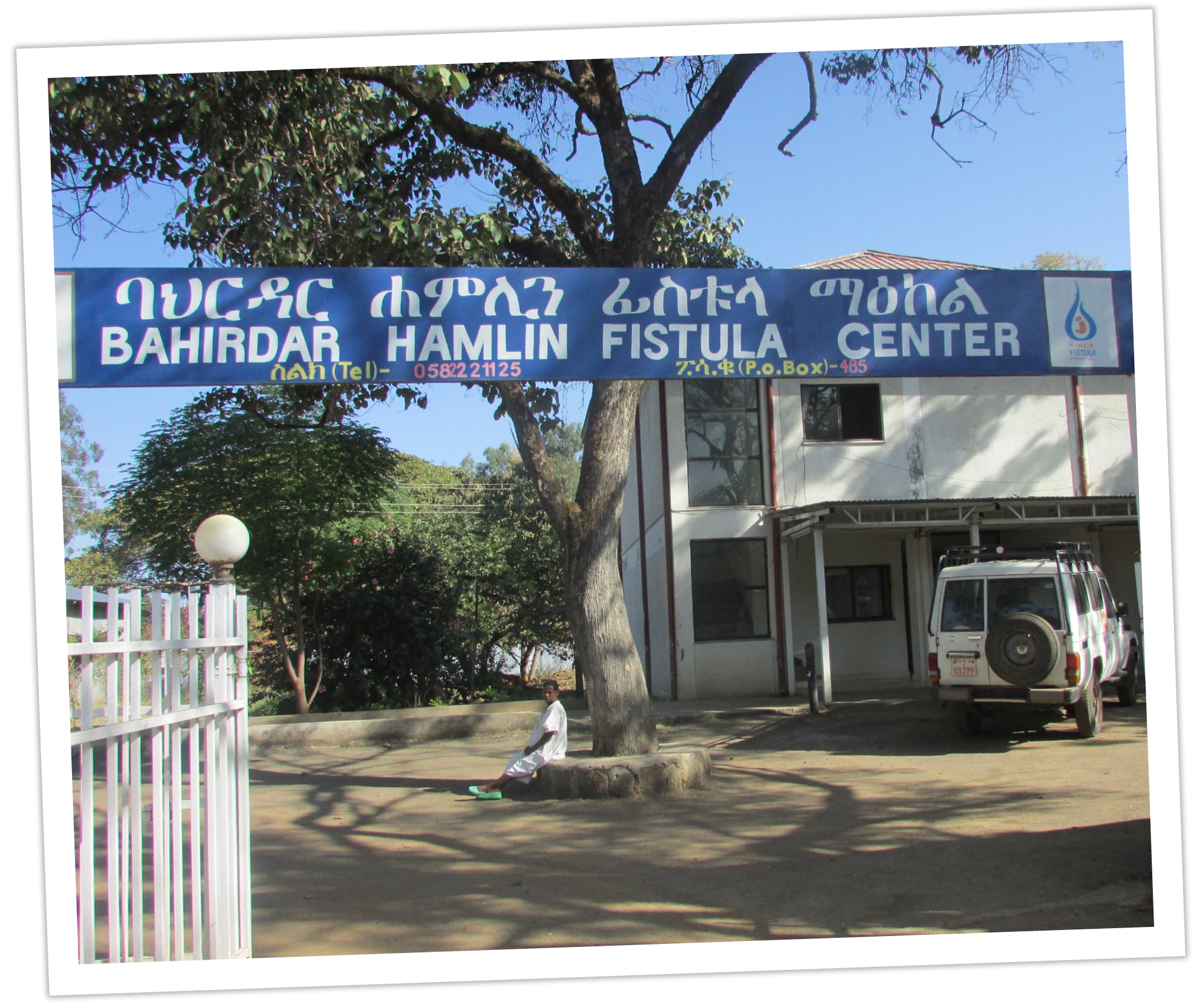
Everything changed when local health workers recognised Birtukan’s suffering and referred her for treatment. With the help of her brother, she made the journey to Hamlin’s Bahir Dar Fistula Hospital.
“The moment I arrived, I felt a weight lift,” Birtukan says.
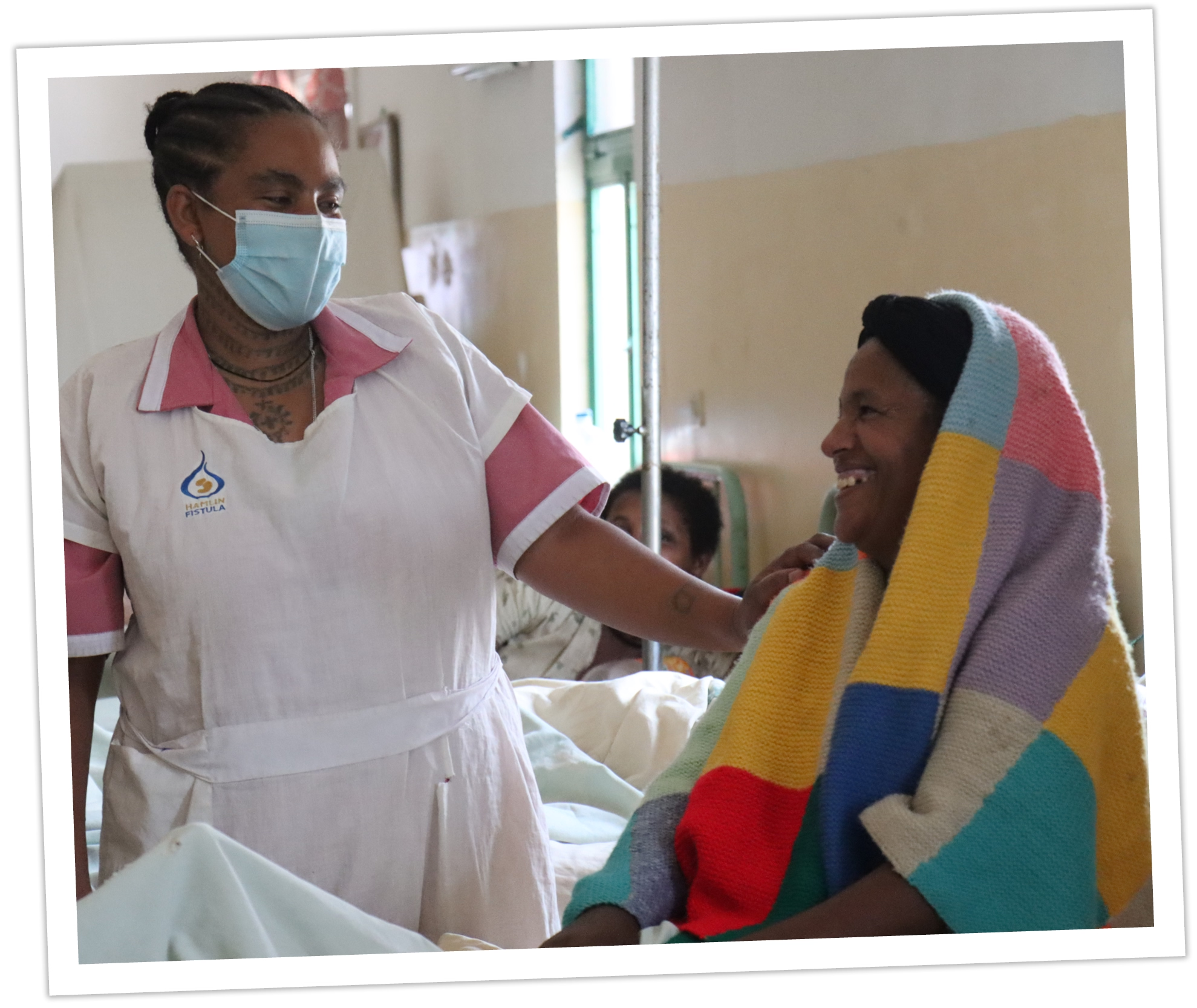
At Hamlin, she received comprehensive care, including medical tests, regular meals, clean water, clothing, hygiene items and compassionate support from the staff.
But for Birtukan, one of the greatest sources of relief was discovering she was not alone. “The greatest relief wasn’t just the physical comfort,” she says. “It was the overwhelming happiness of looking around and finding other women who were facing the exact same challenges.”
Birtukan found herself in a safe and supportive environment where she could rest and recover without fear of judgement. “For the first time in years, I was in a supportive environment where we could use the bathroom, wash ourselves, and rest without facing insults, gossip, or humiliation.”
Healing the whole person
At Hamlin Fistula Ethiopia, repairing the physical injury is just the beginning. The Hamlin Model of Care, the world’s leading approach to treating obstetric fistula, focuses on the whole person. Women receive not only surgery, but also counselling, physiotherapy, nutritional support and compassionate care to support their emotional health and recovery.
For women like Birtukan, this support care helps restore more than physical health. It helps rebuild confidence, dignity and hope. “My time here has been about so much more than just medical healing,” Birtukan says.
Two months into her recovery, Birtukan is feeling much stronger. Hamlin staff provide health education on a range of issues, and Birtukan is also taking part in vocational training in sewing as well as numeracy and literacy classes. “Today, I can proudly write my own name,” she says.
This kind of holistic care recognises that childbirth injuries can affect more than the body. For women recovering from obstetric fistula, treatment must also support psychological health, emotional wellbeing and long-term independence.
Breaking the silence for other women
When Birtukan returns home to Mecha, she says she will not go back in silence. “I want to share my story openly and bring a message of hope to help other women in my community understand this condition,” she says, “so that no one else has to suffer in the dark as I did.”
This Birth Trauma Awareness Week, Birtukan’s story reminds us that childbirth injuries are not only physical. Birth trauma can affect emotional wellbeing, psychological health, relationships and a woman’s place in her community.
But with the right medical treatment, counselling, rehabilitation and support, healing is possible. Women like Birtukan can move beyond pain and isolation — and begin again with dignity, confidence and hope.


Catherine Hamlin Fistula Foundation acknowledges the Traditional Owners and Elders past, present and emerging throughout Australia and the Gadigal people of the Eora Nation, the Traditional Owners of the land and waterways on which our Australian office is situated. We acknowledge the many ethnic groups in Ethiopia and their ancestral and cultural connection to the land where our work is undertaken.