How many steps do you really need? A GP answers your walking questions
September 22, 2026

You don’t need to walk 10,000 steps a day to improve your health. Even a modest increase in your daily step count can support heart health, blood sugar control, mood and sleep.
Dr Michela Sorensen, GP, women’s health expert and co-founder of Elmé Health, answers some of the most common questions about walking – and explains how to prepare safely for a longer challenge such as the Hamlin Barefoot Walk.
Why we walk
Walking: it’s something we do every day without thinking, to get us to A to B. It is also something with huge health benefits. And the good news is that even a few extra steps can have a positive impact on your health. Let’s look at some of the most common questions I get asked about walking.
Do you really need to walk 10,000 steps a day?
No! The 10,000 figure came from a 1960s pedometer marketing campaign, not clinical evidence. Large studies show health improvements with even modest increases in step count – for example if you normally walk around 2,500 but increase to 4,000 steps a day, then cardiovascular and metabolic health improves. Benefits keep building up to roughly 7,000 to 8,000 steps, then flatten. More is fine, but you don't need it to get most of the benefit. So the take home is that every step counts.

Does walking count as exercise if you aren’t out of breath?
Absolutely. In fact, huge benefits are seen from exercise that keeps your heart rate in Zone 2 training, which is a steady, light-moderate pace where you feel your heart race increase but you can still talk in full sentences. While maximum heart and fitness benefits come from brisk walking (such as hills, intervals or a faster pace for part of the walk), strolling still helps. It lowers sedentary time, supports mood and circulation, and improves blood sugar after meals.

Is one long walk better than several shorter walks?
Neither is better overall. Total weekly volume and intensity matter most, and short bouts add up. Shorter walks are easier to sustain, and 10 to 15 minutes after meals can help blood sugar control. They are also a great way to break up long periods of sitting. Longer walks build endurance and cardiovascular fitness. A mix is ideal: regular short walks through the week plus one longer walk.

Is walking enough to support women’s heart and bone health?
Regular brisk walking lowers the risk of heart disease, high blood pressure, type 2 diabetes and stroke. It is one of the best evidence-based exercise options for heart health. Bone responds best to impact and load, so walking on its own only provides modest benefits. Adding some stairs, small jumps or even walking with weights or a weighted vest can help ramp up the bone benefits.

Can walking improve mental health and sleep?
Regular walking is associated with improved mental health and sleep. Even short walks can lift mood and reduce stress in the moment. Studies also show walking improves sleep quality and how quickly you fall asleep. Morning or daytime walks in natural light also help set your body clock.
What’s the safest way to prepare for the Hamlin 25km walking challenge?
- Check in first: See your GP if you have any underlying health conditions or haven’t exercised in a while, just to make sure your training program is safe for you.
- Build gradually: Start with a manageable distance you are comfortable with and increase distance gradually.
- Include some strength training: Focus on calves, glutes, hips, core and single-leg balance to reduce injury risk.
- Fuel and hydrate: Eat carbohydrate-rich meals in the days before, drink regularly during your walks, and carry snacks. In the heat, add electrolytes and sun protection.
- Recover well: Prioritise sleep and rest days.
- Know when to stop: Chest pain, dizziness, severe breathlessness, or sharp or worsening pain in joints or bones is a reason to stop and seek advice.
So remember, you don't need 10,000 steps to get real benefits from walking. Aim for regular, brisk movement, add strength training for your bones, and build up gradually if you're taking on a bigger goal.
Join the Hamlin Barefoot Walk this October
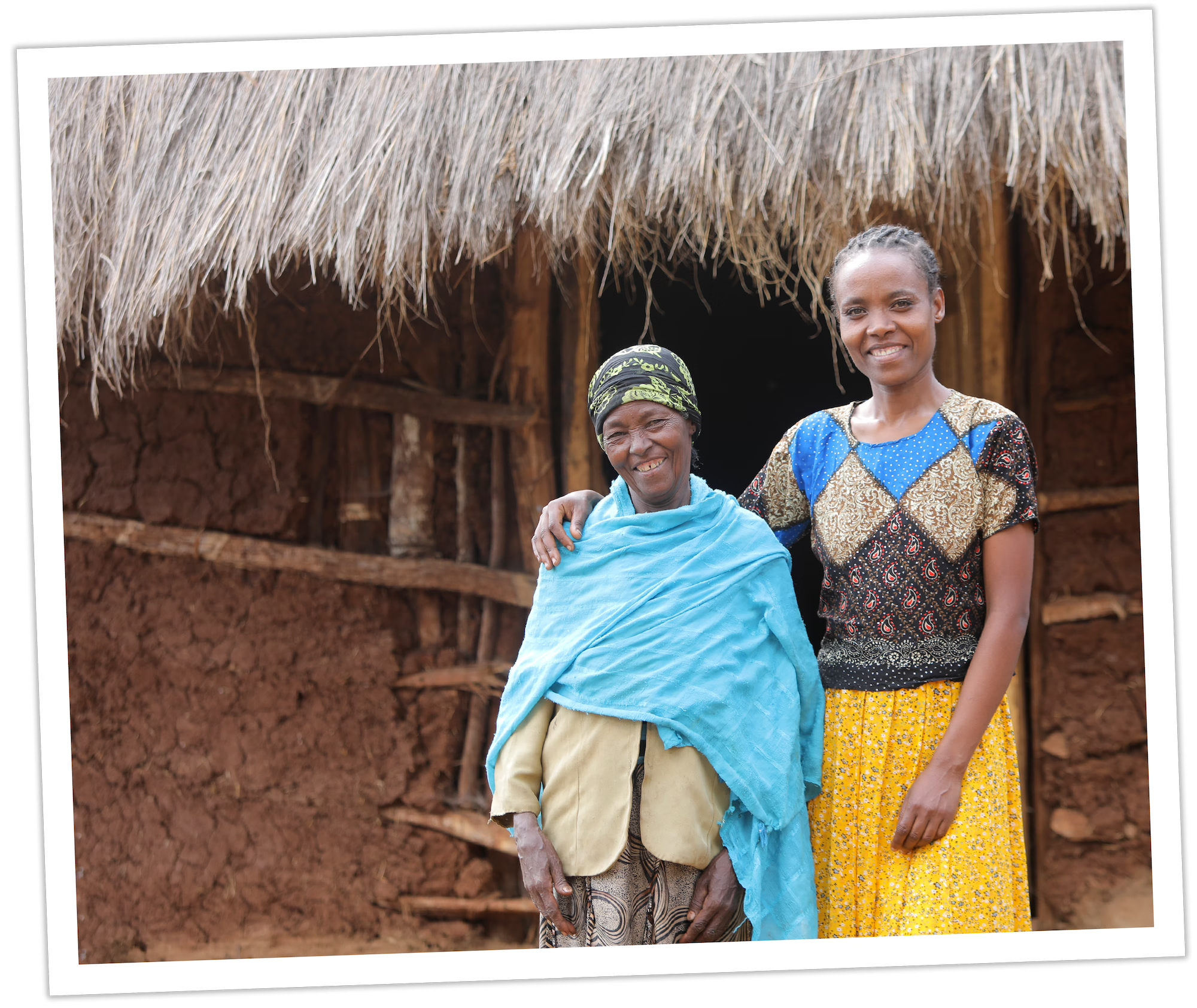
If you’re ready for a challenge, the Hamlin Barefoot Walk is a meaningful place to start. This October, participants will walk 25km—the average distance women in Ethiopia walk to reach medical care. By joining the challenge, you’ll raise funds to help ensure expert treatment is waiting for women living with obstetric fistula and other childbirth injuries when they arrive. [button find out more]
Dr Michela Sorensen is a GP, women’s health expert and co-founder of Elme Health. She also appears on House of Wellness, streaming on 7plus.
When I heard from the health professionals that I would go to Addis Ababa and get cured, I was so happy.
- Tesfanesh, former fistula patient


Catherine Hamlin Fistula Foundation acknowledges the Traditional Owners and Elders past, present and emerging throughout Australia and the Gadigal people of the Eora Nation, the Traditional Owners of the land and waterways on which our Australian office is situated. We acknowledge the many ethnic groups in Ethiopia and their ancestral and cultural connection to the land where our work is undertaken.